
START HERE
Read this in 60 seconds.
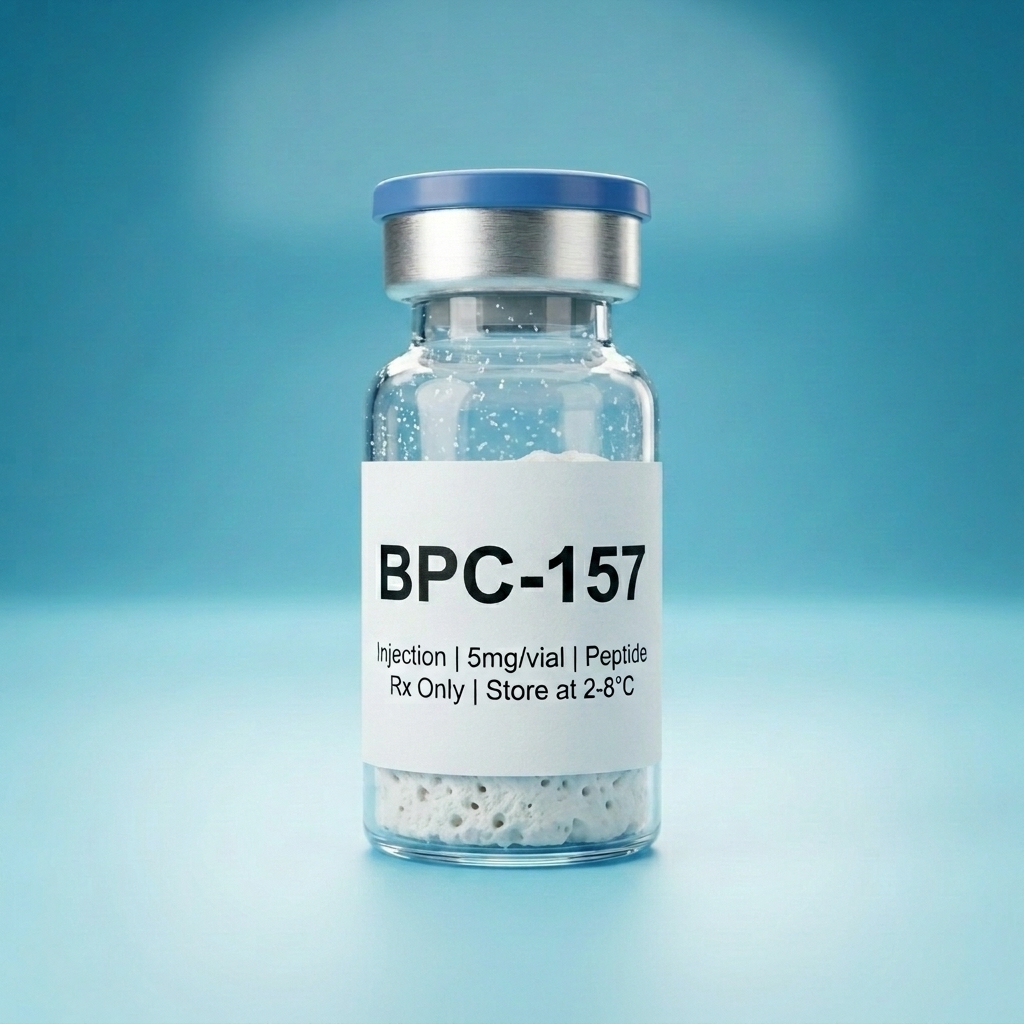
BPC-157 is a fragment of a protein found in stomach juice. The animal evidence for tendon, ligament, and gut healing is unusually consistent — but almost all of it comes from one Croatian research group, only 30 people across 3 uncontrolled studies have ever been formally tested, and the FDA placed BPC-157 in a category of significant safety concern in 2023.
YOU'LL LEARN, IN ORDER
- Is the science good?Mostly animal studies
- Does it work?Strong in animals, not in people
- The short versionTL;DR
- Should I take it?Honest answer
- Where this is from16 studies
How we got to that verdict.
Maybe you found it on Reddit after a bad knee injury. Maybe a training partner swore by it. Maybe you saw a TikTok where someone claimed it healed their torn rotator cuff in three weeks. And then maybe you found someone else saying all the evidence is in rats and none of it means anything for humans.
Both of those takes are missing something important. The truth is that BPC-157 sits in a genuinely unusual place in the research world — the animal evidence is unusually consistent, the human evidence is almost nonexistent, and the reasons for that gap are worth understanding before you make any decisions.
The research journey
Every medical treatment that exists today — aspirin, penicillin, the antibiotic you got last year — started in a lab, moved to animals, and then went through increasingly large human trials before earning regulatory approval. That journey exists because things that work in animals often fail in humans, and safety surprises appear at scale that never showed up in small experiments.
Here's where BPC-157 stands right now: it has a large and reasonably consistent body of animal research, mostly from one research group at the University of Zagreb 1 2, and exactly three published human studies — with a combined total of 30 participants across all three 5 6. There are no large randomized controlled trials in humans. There is no regulatory approval anywhere in the world for any medical use. The FDA actually placed BPC-157 in a category of compounds with "significant safety concerns" in 2023 9, which means it legally cannot be compounded or sold by pharmacies in the United States for patient use.
Animal research is how all medical inquiry starts — aspirin, penicillin, and every drug you've taken went through this stage. But fewer than 1 in 10 animal-tested compounds ever make it through to regulatory approval for humans. That's not a reason to dismiss animal results. It's a reason to treat them as a promising start that needs confirmation, not a finished proof.
One more thing worth knowing before we dive in: almost all of the animal research on BPC-157 comes from a single Croatian research group, and every single study they've published has found positive results. In any field, a pattern like that — one group, zero negative results, across decades — is worth noting as a reason to want independent confirmation. Two independent systematic reviews published in 2025 7 8 both flagged this as a significant limitation of the existing evidence.
The honest bottom line
BPC-157 has a more coherent story in animal research than most compounds discussed in the peptide space, and the two independent systematic reviews published in 2025 give that animal evidence more credibility than it would have from the Zagreb group alone.
But three uncontrolled human studies with a combined total of 30 participants — none of them randomized, none of them blinded, all three from the same clinician — is not enough to establish that BPC-157 works in humans for any indication. The FDA's 2023 decision to place it in a category of significant safety concern, barring compounding, reflects this evidentiary gap.
For tendon and ligament healing — the claim with the strongest underlying data — the animal evidence is promising enough that this is worth watching closely as research develops, and worth discussing with a provider who understands both the potential and the current limits of the evidence. For gut healing and general inflammation, the honest position is that we are earlier in the journey, and anyone telling you those claims are established in humans is getting ahead of the data.
Sources
- Staresinic et al. — BPC 157 accelerates Achilles tendon healing in rats (Journal of Orthopaedic Research)(2003)
- Cerovecki et al. — BPC 157 and medial collateral ligament healing in rats (Journal of Orthopaedic Research)(2010)
- Pentadecapeptide BPC 157 Accelerates Tendon Healing in Rats(2010)
- BPC-157 and Gastrointestinal Tract Lesions(2014)
- Lee & Padgett — BPC-157 intra-articular injection for knee pain (n=16, uncontrolled case series; Alternative Therapies in Health and Medicine)(2021)
- Lee, Walker & Ayadi — BPC-157 for interstitial cystitis (n=12, uncontrolled; Alternative Therapies in Health and Medicine)(2024)
- Hospital for Special Surgery 2025 systematic review — independent assessment of BPC-157 preclinical evidence (35 animal/cell studies, 1 human)(2025)
- University of Utah 2025 narrative review — VEGF pathway considerations and human-trial gap(2025)
- FDA bulk drug substance category designation (2023) — BPC-157 placed in category of significant safety concern, barring compounding(2023)
Some links above point to PubMed search results rather than direct study pages where the original publication wasn't indexed (mostly for the company press releases that were never peer-reviewed). When that happens, the search query is scoped to the specific compound and topic.