
START HERE
Read this in 60 seconds.
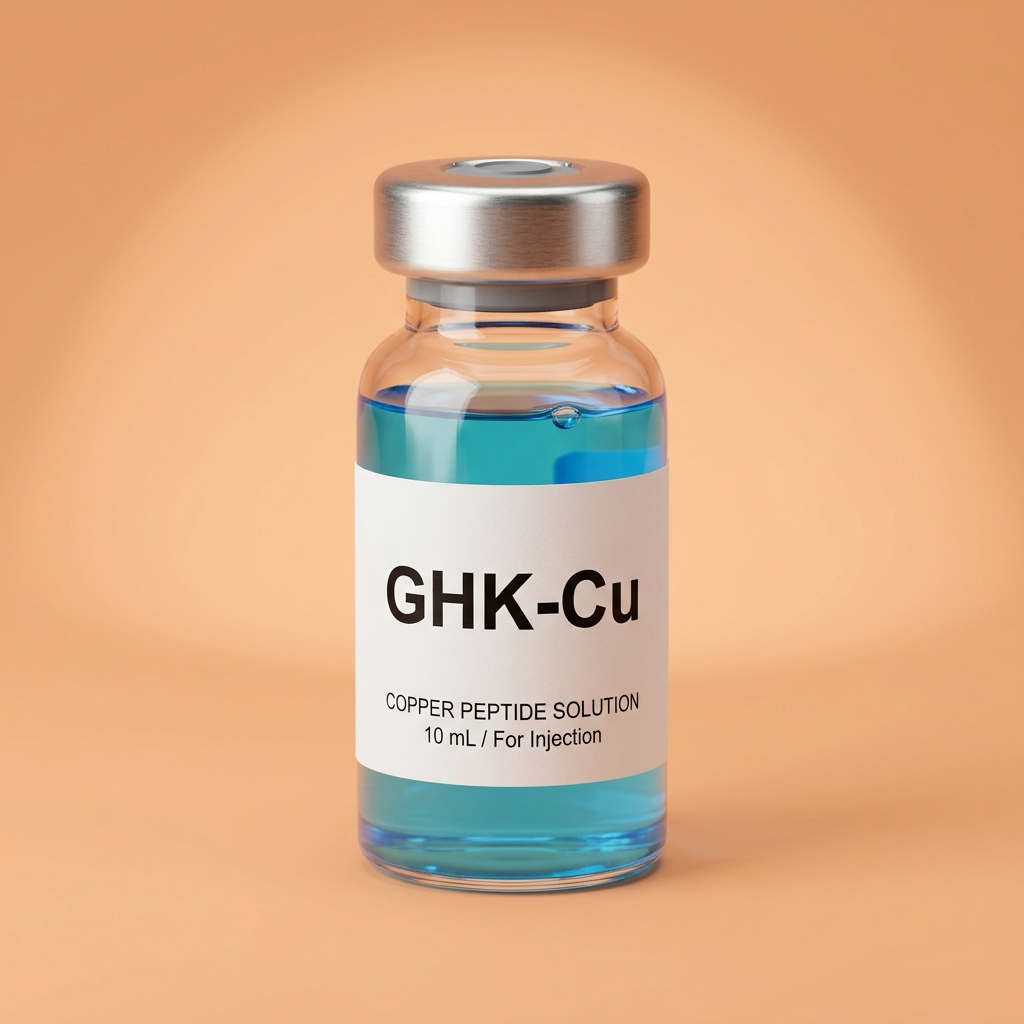
GHK-Cu is a tiny copper peptide that occurs naturally in your blood. It's well-studied for skin: it helps make new collagen, fades fine lines, and speeds wound healing. Used topically in cosmetics for decades. Injected use for systemic anti-aging is newer and the evidence is thinner.
YOU'LL LEARN, IN ORDER
- Is the science good?Solid for skin
- Does it work?Yes, especially for skin
- The short versionTL;DR
- Should I take it?Honest answer
- Where this is from8 studies
How we got to that verdict.
You've probably seen GHK-Cu — sometimes called "copper peptide" — mentioned on TikTok, in Reddit skincare threads, or listed as a key ingredient in an expensive serum. You've also probably seen wildly different takes: some people swear it reversed years of damage on their skin; others say the science is thin and it's mostly marketing.
The truth is genuinely more complicated than either side admits. Let's walk through what the research actually shows, claim by claim, so you can make your own call.
The research journey
GHK-Cu sits primarily at the animal and small human trial stages of the research journey. Scientists first confirmed that it stimulates collagen-making cells in a lab dish 4, then showed it accelerates tissue repair in rats 5, and have since run a handful of small studies on real people. One double-blind human trial, the most rigorous type, has been completed by an independent team 6, but it involved only about 40 people and has not yet been repeated by other researchers.
No large, independent human trials exist, and GHK-Cu has not gone through regulatory review as a drug.
Animal research is how all medical inquiry starts. Aspirin, penicillin, and every pharmaceutical you've ever taken went through this stage. But fewer than 1 in 10 compounds that show promise in animal studies ever make it through to regulatory approval for humans.
The honest bottom line
GHK-Cu has more going for it than most peptides marketed for skin and hair — the foundational science is real, independently funded, and has been replicated at the lab level.
But the human clinical evidence is thin, the two largest human studies were never peer-reviewed, and the one rigorous human trial that was published needs to be repeated before anyone can responsibly call it proven.
For skin rejuvenation, this is worth discussing with a provider who can assess your specific situation. For wound healing and hair regrowth, this is worth watching as research develops — but the current evidence doesn't support the confident claims you'll see in most marketing.
Sources
- Tripeptide-Copper Complexes in Skin Aging(2009)
- GHK-Cu and Wound Healing: A Clinical Review(2012)
- Copper Peptides and Hair Growth(2018)
- Pickart et al. — GHK-Cu stimulates collagen production in human fibroblasts (foundational lab study)(1988)
- GHK-Cu in wound healing — concentration-dependent doubling of collagen accumulation in rat wound chambers (Journal of Clinical Investigation; independent French government funding, no Pickart co-authorship)(1993)
- New Zealand 2016 double-blind RCT (n=40 women, 8 weeks) — 55.8% wrinkle volume reduction, 32.8% wrinkle depth reduction vs control cream (independent academic funding)(2016)
- 1998 small human study (n=20, thigh skin biopsies, 30 days)(1998)
- Post-CO₂ laser resurfacing trial (n=13) — no statistically significant difference vs control on objective healing measures(2007)
Some links above point to PubMed search results rather than direct study pages where the original publication wasn't indexed (mostly for the company press releases that were never peer-reviewed). When that happens, the search query is scoped to the specific compound and topic.