
START HERE
Read this in 60 seconds.
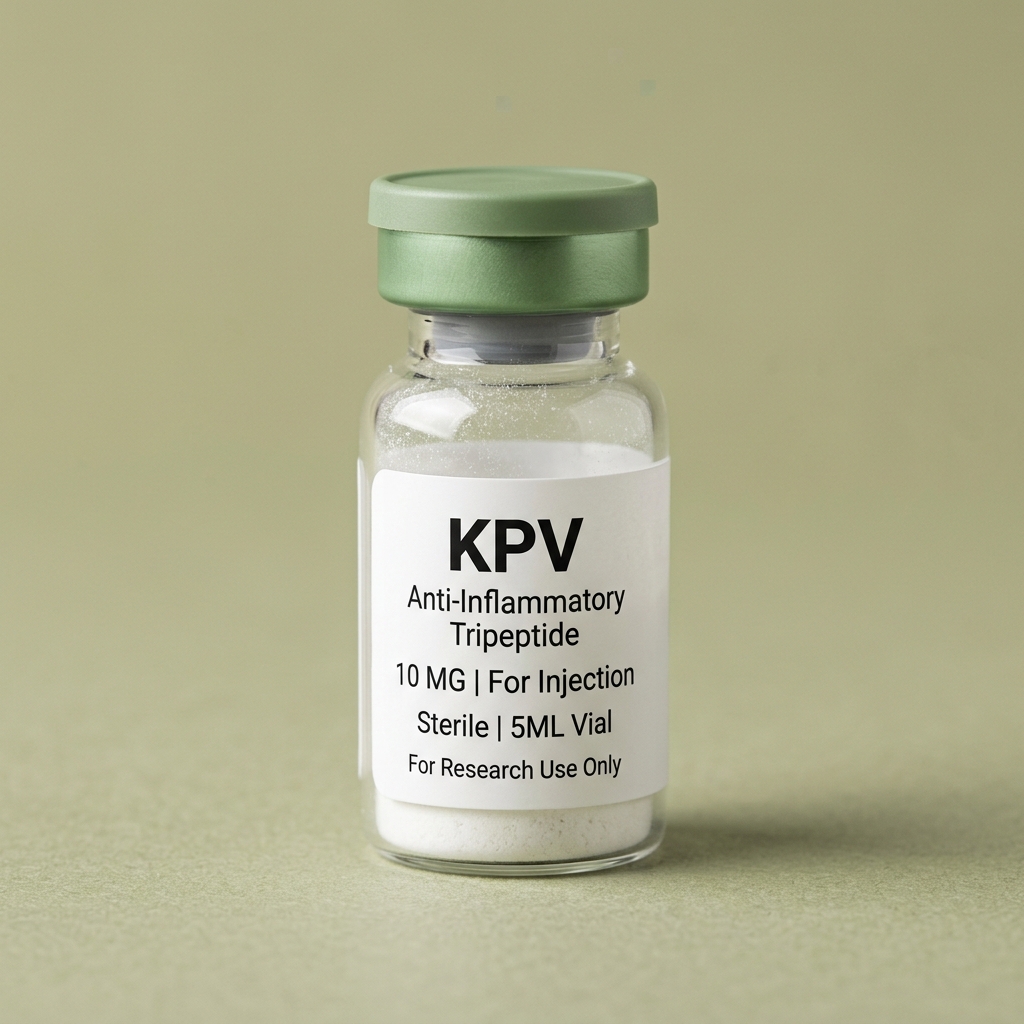
KPV is a tiny three-amino-acid fragment of alpha-MSH (a hormone your body already makes). The animal evidence for gut inflammation is real — two independent research groups, NIH funding, mapped mechanism — but no human studies have ever been published. Take it as a promising start that still needs confirmation in people, not a finished proof.
YOU'LL LEARN, IN ORDER
- Is the science good?Animal-stage, replicated
- Does it work?Strong in animals, no human data
- The short versionTL;DR
- Should I take it?Honest answer
- Where this is from7 studies
How we got to that verdict.
You've probably seen KPV mentioned on Reddit threads, in IBD Facebook groups, or by someone at a clinic who seemed genuinely excited about it. You've also probably run into people calling it "completely unproven" or seen sellers making it sound like a miracle fix for your gut.
Neither of those takes is quite right. KPV is a tiny three-amino-acid fragment of a hormone your body already makes. The research on it is real, it's been going on since 1989, and some of the findings are genuinely interesting — especially for people dealing with gut inflammation. But almost all of that research has been done in mice and lab dishes, not in people. This page walks through every major claim about KPV, study by study, so you can see exactly what's been shown, what's been assumed, and what's still missing.
The research journey
Every drug or compound that's ever made it to a pharmacy shelf started in a lab. Researchers first test whether something does anything at all — usually in cell cultures or petri dishes. Then they test it in animals. Then small groups of humans. Then large, rigorous human trials. Then, if all of that holds up, regulatory agencies like the FDA review everything and decide whether to approve it.
KPV is currently at the animal study stage, with a meaningful body of lab work supporting it but no published human trials of any size. To be clear about what that means: animal research is how all medical inquiry starts. Aspirin, penicillin, and every medication you've ever taken went through this stage first. But fewer than 1 in 10 compounds that show promise in animals ever make it all the way through to regulatory approval for people.
That's not a reason to dismiss what the animal research shows 1 2 — it's a reason to treat it as a promising start that still needs confirmation in humans, not a finished proof.
The honest bottom line
KPV has a more coherent and substantive research foundation than most peptides you'll find being sold online — two independent animal research groups, NIH funding, a mapped molecular mechanism, and findings published in respected scientific journals. For gut inflammation specifically, the animal data is genuinely interesting and scientifically plausible.
But none of these studies were done in people, gut barrier function has never been directly measured, skin inflammation has never been specifically tested 5, and no one yet knows how much oral KPV actually reaches your colon in a therapeutically relevant amount. The antimicrobial claim 6 7 is contradicted by a separate study under different conditions and shouldn't be relied on as established.
KPV for gut inflammation and IBD support is worth discussing with a provider who can weigh it against your specific situation, current treatments, and risk tolerance — and worth watching carefully as research develops. For skin or antimicrobial use, the evidence simply doesn't yet support the claims being made.
Sources
- Dalmasso et al. — KPV in mouse colitis (Gastroenterology, NIH + Crohn's Foundation funded; ~50% / ~30% inflammation reduction in two mouse models; NF-κB mechanism confirmed in human cell lines)(2008)
- Kannengiesser et al. — KPV in three mouse colitis models including CD45RBhi transfer (Inflammatory Bowel Diseases, University of Muenster; independent replication of Dalmasso findings)(2008)
- Land et al. — KPV uptake mechanism mapped in airway epithelial cells (University of Dundee; PepT1 transport confirmed)(2012)
- Xiao et al. — Nanoparticle-delivered KPV in mouse colitis (Molecular Therapy; reduced colitis severity; sample sizes not fully reported)(2017)
- Hiltz & Lipton — Original KPV anti-inflammatory activity demonstrated, independent of melanocortin receptors(1989)
- KPV and alpha-MSH antimicrobial activity vs S. aureus and C. albicans (Journal of Leukocyte Biology; NIH + Italian government funded)(2000)
- Conflicting result: modified KPV antimicrobial study found unmodified KPV showed no antimicrobial effect under different testing conditions(2010)
Some links above point to PubMed search results rather than direct study pages where the original publication wasn't indexed (mostly for the company press releases that were never peer-reviewed). When that happens, the search query is scoped to the specific compound and topic.