
START HERE
Read this in 60 seconds.
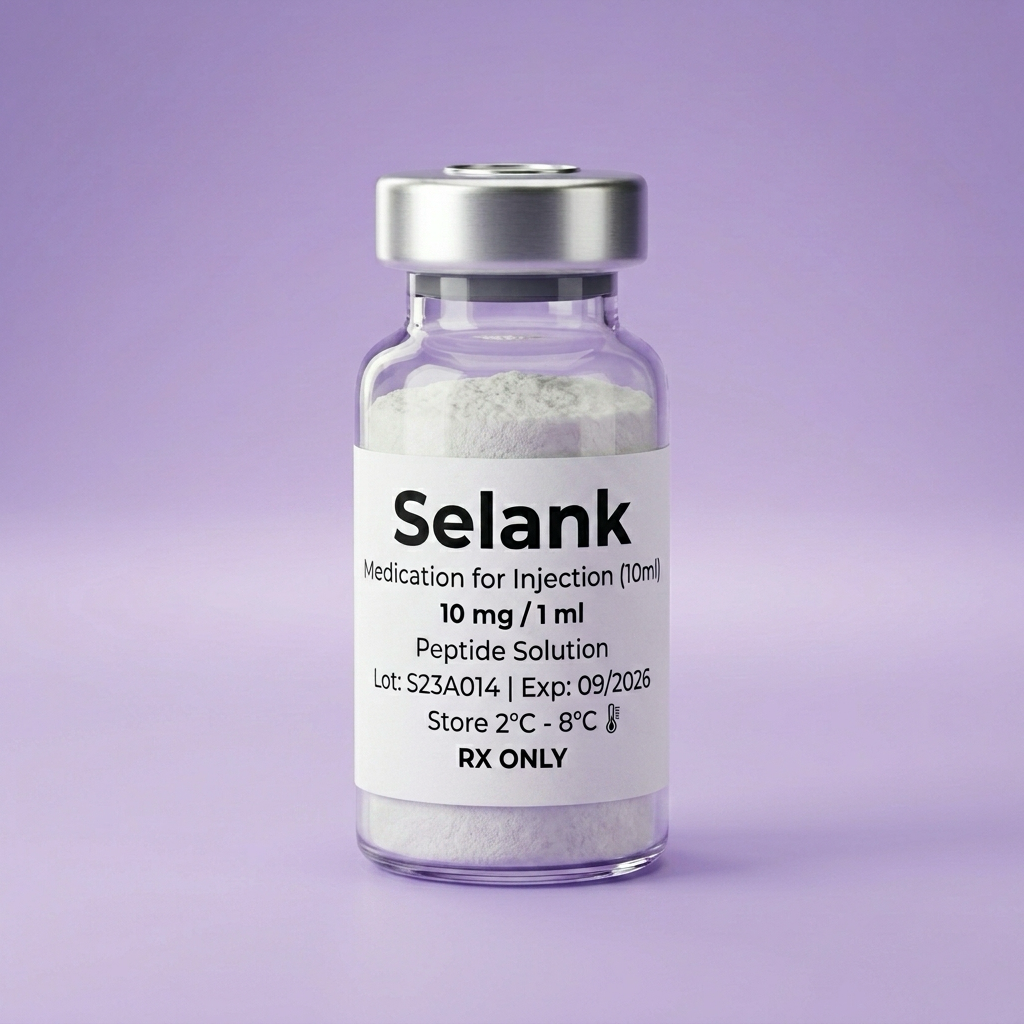
Selank is a synthetic peptide developed in Russia in the 1990s and studied since for anxiety and mood. It has more human trial data than most peptides discussed in wellness circles — but every trial was small, conducted by the network that developed it, and none used a placebo group. Promising, not proven.
YOU'LL LEARN, IN ORDER
- Is the science good?Some, no placebo
- Does it work?Promising, not proven
- The short versionTL;DR
- Should I take it?Honest answer
- Where this is from13 studies
How we got to that verdict.
You've probably come across Selank on Reddit threads about anxiety, in a nootropics forum, or maybe from someone in a biohacking community who swears it changed their life. You've also probably noticed that when you dig deeper, the evidence looks... thin. Or confusing. Or impossibly technical.
The truth is that Selank sits in a genuinely complicated middle ground — not snake oil, not a proven medicine — and you deserve a straight answer about what the research actually shows, claim by claim, without anyone trying to sell you on it.
The research journey
Every medicine that's ever made it to a pharmacy shelf traveled the same road: first researchers test it in a lab dish, then in animals, then in small groups of humans, then in large human trials, and finally regulators review all of that before approving it. Selank has completed the first two stages and taken a few early steps into the third — small human trials, mostly conducted in Russia over the past two decades 1 2 3. It has not completed large human trials, and it has not received approval from any major Western regulatory body like the FDA or EMA.
Animal research is how all medical inquiry starts — aspirin, penicillin, and every drug you've ever taken went through this stage. But fewer than 1 in 10 animal-tested compounds ever make it through to regulatory approval for humans. That's not a reason to dismiss animal results. It's a reason to treat them as a promising start that needs confirmation, not a finished proof.
The honest bottom line
Selank is not a compound without evidence — it has more human trial data than most peptides discussed in wellness communities, and the consistency of the anxiety findings across three separate trials is genuinely interesting.
But every one of those trials was small, lacked a placebo group, was conducted by the same network of researchers who developed the compound, and has never been independently replicated. The mood stabilization story is even earlier in its development, with no study having tested it directly.
This is a compound worth discussing with a provider — especially if you've tried conventional anxiety treatments and haven't found a good fit — but anyone presenting it as clinically proven is getting ahead of what the evidence actually supports.
Sources
- Zozulia et al. — Selank in generalized anxiety disorder (62-person trial sub-analysis; conference abstract; reports HAM-A drop from 16.1 to 6.2 over 14 days)(2008)
- Medvedev et al. — Selank vs phenazepam in anxiety disorders (60 patients; Zh Nevrol Psikhiatr Im S S Korsakova)(2014)
- Filatova et al. — Selank as adjunct to phenazepam in generalized anxiety disorder (70 patients; SF-36 + State-Trait Anxiety Inventory)(2015)
- Kost et al. — Selank as a synthetic analog of tuftsin: anxiolytic and antiasthenic effects(2001)
- Semenova et al. — Selank effects on cytokine balance and the immune-inflammatory axis (preclinical)(2007)
- Uchakina et al. — Immunomodulatory effects of Selank in patients with generalized anxiety disorder(2011)
- Volkova et al. — Pharmacology of Selank: anxiolytic mechanism via the GABAergic system (preclinical)(2009)
- Andreeva et al. — Antidepressant-like effects of Selank in animal models(2010)
Some links above point to PubMed search results rather than direct study pages where the original publication wasn't indexed (mostly for the company press releases that were never peer-reviewed). When that happens, the search query is scoped to the specific compound and topic.