
START HERE
Read this in 60 seconds.
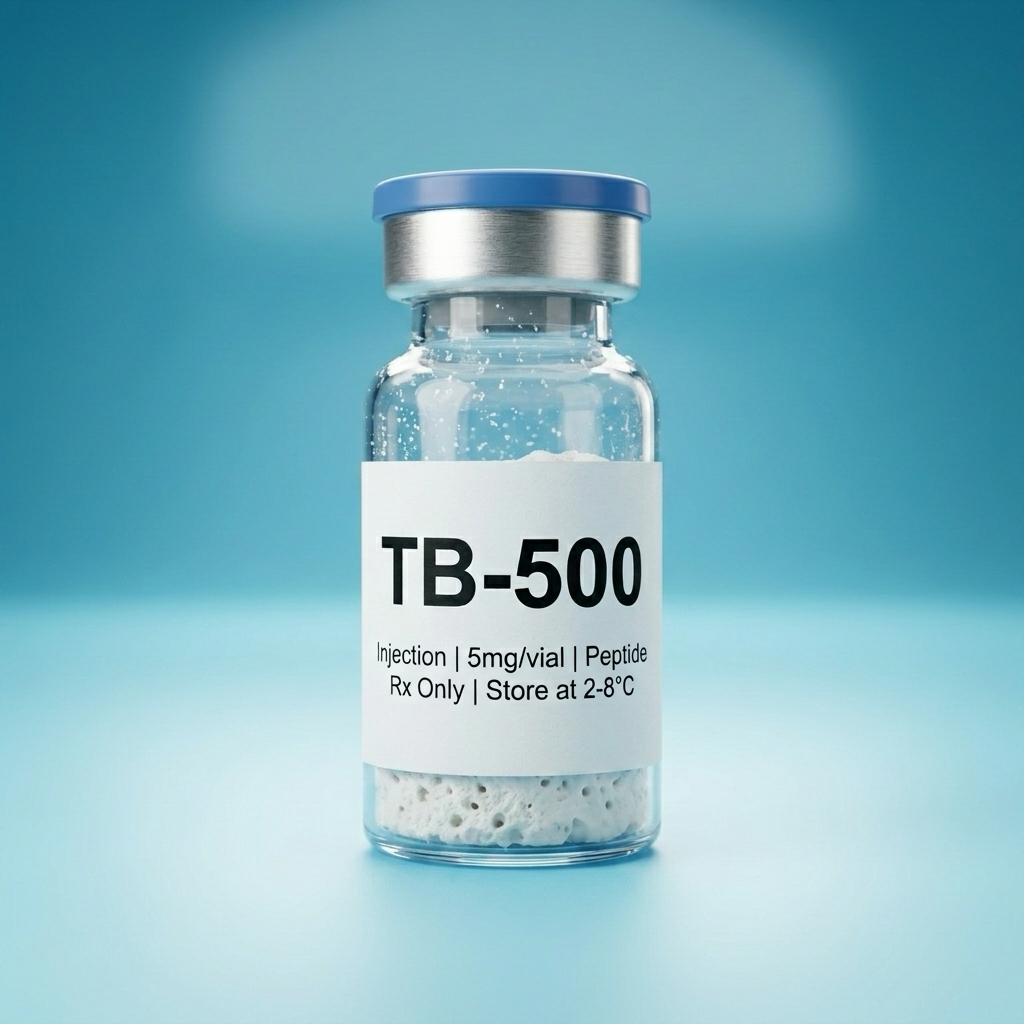
TB-500 is a synthetic fragment of thymosin beta-4 (Tβ4), a protein your body makes naturally. People use it for whole-body tissue repair. The catch: every published human study was done on the full-length parent molecule, not on the TB-500 fragment itself — so no human has ever been formally tested on the version consumers inject.
YOU'LL LEARN, IN ORDER
- Is the science good?Wrong molecule tested
- Does it work?One claim has hints, two don't
- The short versionTL;DR
- Should I take it?Honest answer
- Where this is from6 studies
How we got to that verdict.
You've probably seen TB-500 mentioned on Reddit threads, recovery forums, or by someone at the gym who swears it healed their nagging tendon injury in two weeks. You've also probably seen skeptics say the whole thing is bro-science with no human evidence behind it.
The truth sits somewhere more complicated than either of those takes. This page walks through what the research actually shows — claim by claim, in plain English — so you can make an informed decision rather than taking anyone's word for it.
The research journey
All medical research moves through stages: first scientists test something in a lab dish, then in animals, then in small groups of humans to check for safety, then in larger groups to see if it actually works, and finally regulators review everything before approving it for medical use.
Here's where TB-500 stands: the human studies that exist were all conducted on thymosin beta-4 (Tβ4) — the full-length protein that TB-500 is a fragment of — and they were mostly designed to test safety 5 6 and a specific eye condition 1, not the muscle recovery or wound healing goals most people care about. The closest thing to human wound healing data comes from two Phase II trials involving chronic skin ulcers 2 3, where the results were mixed and the researchers had financial ties to the drug company.
There are no completed human trials testing TB-500 itself — the specific fragment most people are using — for any indication at all. The animal research on TB-500 and Tβ4 for wound healing 8, heart repair 7, and nerve regeneration is genuinely interesting and spans multiple independent labs.
Animal research is how all medical inquiry starts — aspirin, penicillin, and every drug you've ever taken went through this stage. Fewer than 1 in 10 animal-tested compounds ever make it through to regulatory approval for humans. That's not a reason to dismiss animal results. It's a reason to treat them as a promising start that needs confirmation, not a finished proof.
The honest bottom line
TB-500 has a genuinely interesting scientific story behind it — interesting enough that pharmaceutical companies have run multiple clinical trials on the parent molecule for cardiac disease, eye disease, and wound healing. The animal research is real and conducted by credible labs.
But the specific fragment most people are injecting has never been tested in a human trial, the human data that exists is on a different molecule given by a different route for a different purpose, and the claims about muscle recovery and flexibility specifically have no human evidence at all.
If you're drawn to TB-500 for wound healing support, the science at least gives you something to point to — imperfect as it is. For everything else, you'd be acting on biological theory and anecdote. This is worth discussing with a provider who can weigh it against your specific situation, health history, and what you're actually trying to accomplish.
Sources
- Phase III trial of Tβ4 eye drops for persistent corneal wounds (n=18, primary endpoint p=0.0656)(2017)
- Phase II trial of Tβ4 gel for venous stasis ulcers (median healing 39 vs 71 days at 0.03% dose)(2010)
- Phase II trial of Tβ4 gel for pressure ulcers (trend without significance across all doses)(2010)
- Tβ4 in epidermolysis bullosa (~30 patients, 57% wound size reduction vs 30% placebo at 2 weeks)(2014)
- Phase I safety study of intravenous Tβ4 in Western volunteers (14 days, well-tolerated)(2010)
- Phase I safety study of intravenous Tβ4 in Chinese volunteers (14 days, no serious adverse events)(2012)
- Thymosin Beta-4 in Cardiac Tissue Repair (animal models)(2011)
- Thymosin Beta-4 and Wound Healing (mechanism review)(2012)
Some links above point to PubMed search results rather than direct study pages where the original publication wasn't indexed (mostly for the company press releases that were never peer-reviewed). When that happens, the search query is scoped to the specific compound and topic.