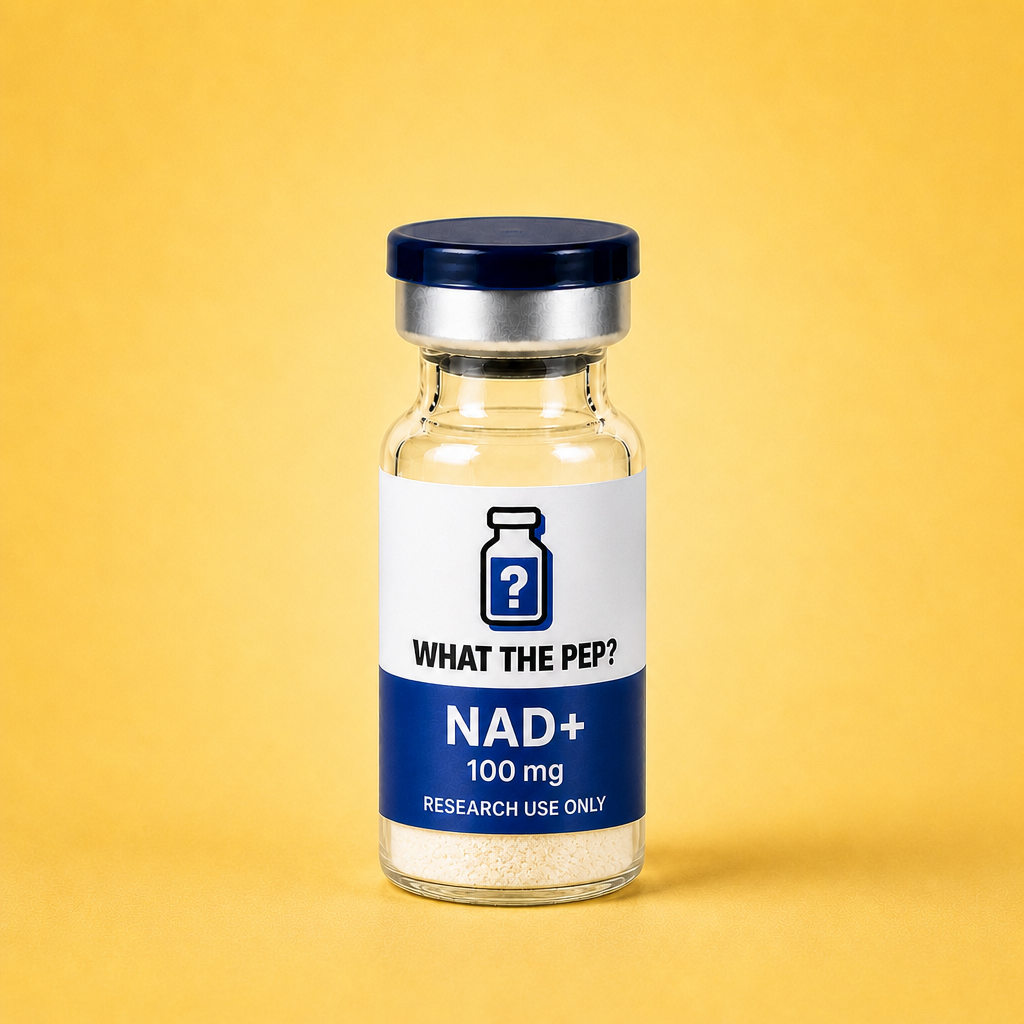


NAD+
Nicotinamide Adenine Dinucleotide
A critical coenzyme found in every cell of your body, essential for energy production and DNA repair. NAD+ levels naturally decline with age. NAD+ has more legitimate biology and animal data than most compounds in the wellness space, but for the things people actually take it for (energy, focus, anti-aging, addiction recovery), the human evidence is mostly small, short, or measuring blood levels rather than how anyone actually felt.
Strong animal and lab research
For education only.Information about NAD+ is for education only. Doses, routes, and protocols must come from a licensed healthcare provider familiar with your individual medical history. More.

Energy & Fatigue
In a 25-person study of prediabetic women, 250 mg/day of NMN improved how muscles use insulin, an early step in energy production. In trained runners, 600 to 1,200 mg/day of NMN improved aerobic capacity over 6 weeks. No published trial has measured whether daily energy or fatigue actually changes for healthy adults taking NAD+ or its precursors.

Anti-Aging & DNA Repair
NAD+ activates sirtuin proteins that regulate DNA maintenance and cellular cleanup, with strong evidence in mice that raising NAD+ reverses several aging markers (vascular function, muscle deterioration). The Yoshino NMN trial in humans showed metabolic benefits without raising muscle NAD+, complicating the simple story. No human trial has measured a validated biological age marker (epigenetic clock, telomere length, senescence) after NAD+ supplementation.

Cognitive Function
Animal studies show neuroprotective effects and improved memory in aging mouse models. The brain biology is plausible. But no published randomized controlled trial has tested whether NAD+, NMN, or NR improves cognitive performance, memory, or brain fog in healthy humans. The brain-fog-clearing claim is widely circulated and barely studied.

Addiction & Withdrawal Recovery
IV NAD+ infusions are widely used in commercial addiction-recovery clinics, with consistent provider-reported outcomes for withdrawal symptom relief. But there is no published randomized controlled trial testing NAD+ against placebo or against standard addiction treatment for any substance. Mechanistic rationale is plausible (people with substance use disorders show lower NAD+ levels), but the controlled evidence has not been generated yet.
Not medical advice. Talk to a licensed provider.