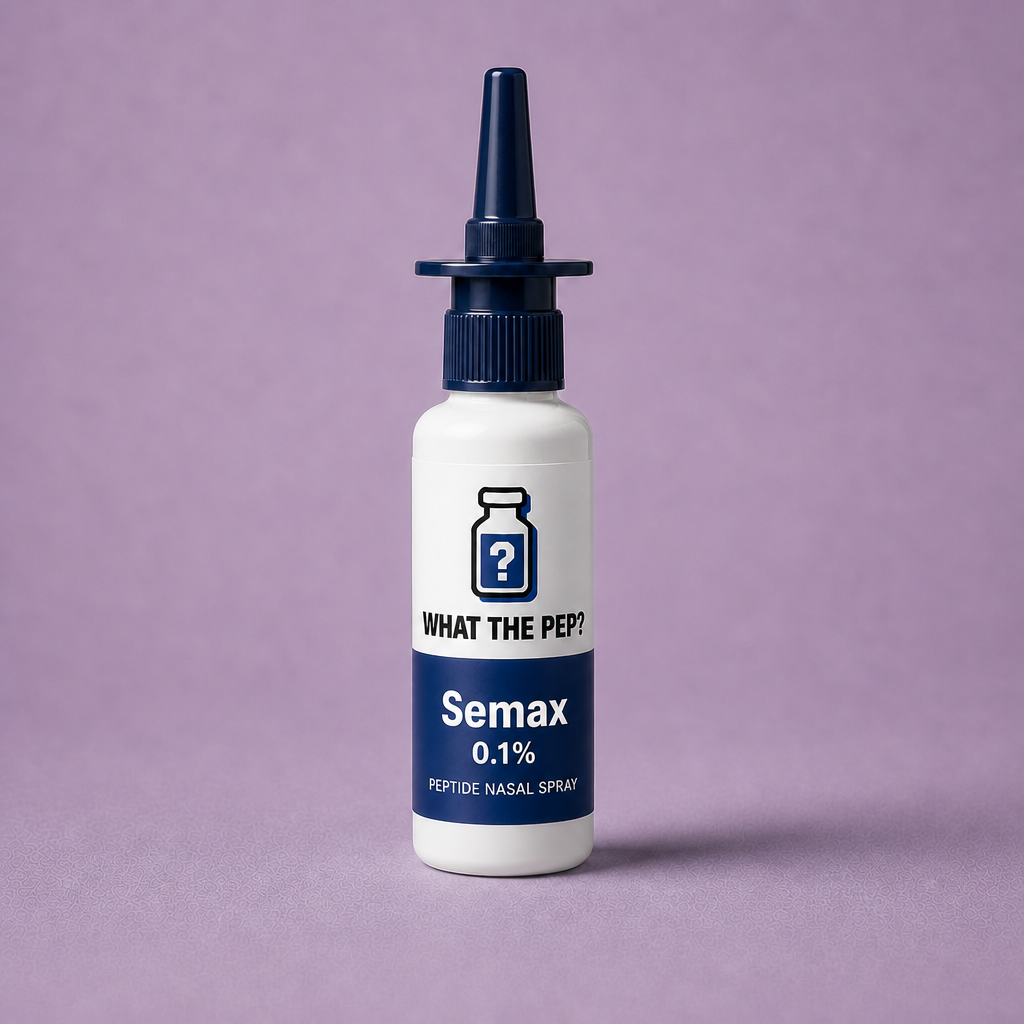


Semax
Semax
A synthetic peptide derived from a fragment of a natural stress-response hormone (ACTH), originally developed in Russia in the 1980s for stroke recovery and now widely promoted in nootropics communities for focus and memory. The biological story is more coherent than most peptides at this stage. But every human study was conducted in stroke patients by researchers tied to the compound's inventors, and the one trial in healthy people scanned brains for 20 minutes without testing whether anyone actually thought more clearly.
Growing evidence. Some early human studies
For education only.Information about Semax is for education only. Doses, routes, and protocols must come from a licensed healthcare provider familiar with your individual medical history. More.

Focus & Cognitive Performance
Widely used as a nootropic for focus and mental clarity. The strongest direct evidence in healthy people is a 24-person brain-imaging study showing measurable changes in attention-related brain networks within 20 minutes. But no cognitive performance test was ever given. Animal studies show Semax raises BDNF (a brain-growth protein) in regions tied to attention.

Memory Support
In rats, Semax produces transient BDNF increases in the hippocampus (a brain region central to memory) that peak around 90 minutes after dosing. One rat behavioral study showed improved learning on a shock-avoidance task. No published human study has measured memory performance in healthy adults.
Stroke & Brain Injury Recovery
This is where the actual human evidence is. Multiple Russian clinical studies in stroke patients suggest Semax accelerates neurological recovery and improves functional independence over months. Caveats: trials were not properly randomized or blinded, and the compound's inventor is a co-author on the largest study.
Brain Health (Neuroprotection)
Animal models show Semax affects gene networks involved in brain repair, inflammation, and cell survival following induced brain injury. A genome-wide expression study in rats with induced ischemia found Semax altered hundreds of genes related to neurorestoration. These are mechanistic findings in injured rat brains, not proof of brain protection in healthy humans.
Not medical advice. Talk to a licensed provider.